
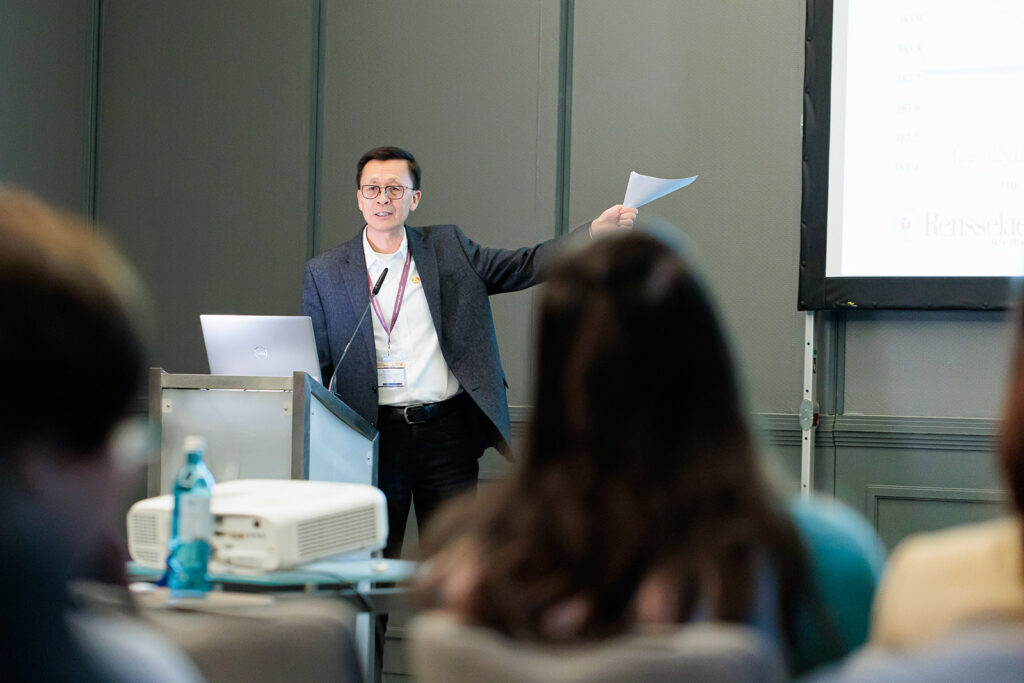
Submit your abstract & be a speaker!
General information
- In order to give a presentation at the Workshop, a short abstract has to be submitted first.
- Abstracts can be submitted 14 December 2026.
- In-person participation in Bali is mandatory for speakers and poster presenters presenting their work.

Take advantage of major speaker benefits!
- Network with political influencers, international experts, and practitioners from 30+ countries.
- Gain recognition from leading international experts.
- Share your insights and research findings with peers, creating awareness for your project.
- Inspire with actionable ideas and engage with a global audience.
Timeline
| Dates | Event | Details |
|---|---|---|
| 21 SEP – 14 DEC 2026 | Call for Papers | Submit your abstract via the online submission & registration portal |
| 15 DEC 2026 – 31 JAN 2027 | Abstract Review | The Advisory Committee will review, evaluate, and score abstracts in their field of expertise |
| 01 FEB 2027 | Notification of Acceptance | Notifications of acceptance will be sent to those selected for an oral or poster presentation |
| 01 – 15 FEB 2027 | Registration | All accepted authors need to be registered for the workshop |
| 01 FEB – 25 MAR 2027 | Submit Paper & Copyright, CV, Presenter photo |
Authors accepted for an oral or poster presentation need to submit their paper and associated items |
| 26 MAR – 23 APR 2027 | Submission of Presentations | Authors accepted for an oral presentation will be asked to submit their presentations |
Abstract checklist
Help reviewers from the Advisory Committees understand and evaluate your project
- Keep your abstract short
- It should not exceed 3,000 characters
- No pictures, graphics, references and mathematical equations to be included
Point out:
- general scope
- main results obtained
- methods used
- relevance of the subject matter
- major conclusions drawn
Indicate if it is:
- a master thesis, a Ph.D. thesis
- a research project
- an observation study etc.
Indicate on which data the abstract is based on:
- field data
- lab data
- original analysis, technology
Topics of the workshop
For a better overview and easier understanding, the detailed topics are grouped.
Overarching Topics
Power System Modelling and Grid Operations
- Grid Congestion Analysis and Mitigation
- Power System Expansion and Planning
- Operational Aspects of Power Systems
- Synchronous Condenser Technology and Applications
- Flexibility Needs for High vRE Penetration
Power-to-X Technologies and Sector Integration
- Power-to-X System Modeling and Case Studies (e.g., Hydrogen, E-Fuels)
- Large-Scale Load and Data Center Modeling
Challenges in Weak Grids and Emerging Markets
- Infrastructure Challenges and Solutions for Weak Grids
- Global South: Grid Integration Challenges
Grid Codes and Emerging Challenges
- Grid Codes and Standards: Current Challenges and Future Trends
- Power System Balancing and Stability Aspects
- Grid Code Compliance for Large Loads and Data Centers
- Grid Code Testing and Certification Procedures
Conventional Generation Flexibilisation for vRE Integration
Grid Forming
- Grid Forming Capabilities and Practical Experience
- Grid-Forming Capabilities: Frequency Control with PV Systems
AI, Smart Grids, Automation, and Cybersecurity
- Smart Grid Technologies and IT Innovations
- AI and Machine Learning for Grid Integration
- Cybersecurity Solutions for Critical Infrastructure
Ancillary Services and Forecasting
- Ancillary Services for Grid Support
- Power System Forecasting and Predictive Modelling
- Smart Innovations for Ancillary Services
Hybrid Power Systems (Island Systems)
- Modelling and Operation of Hybrid Power Systems
- Project Experience with Hybrid Power Plants: Deployment and Operational Case Studies
Regulatory Framework and Market Aspects
- Regulatory Standards and Policies
- Market Rules related to VRE
- Demand-Side Management (DSM) Strategies
- Demand-Side Regulations and Standards
System Stability and Security of Energy Supply
- Energy Supply Security and Risk Mitigation Strategies
- HVDC (High Voltage Direct Current) and FACTS (Flexible AC Transmission Systems)
- Role of Synchronous Condensers in Grid Stability
Decarbonization and Industrial Applications
- Decarbonization Strategies for Energy Sectors
- Decarbonizing Industrial Processes
Hybrid Power Plants (Wind + PV+ Batteries + at one PCC)
- Modelling of Hybrid Power Plants (Wind + Batteries + Other Technologies)
- Project Experience with Hybrid Power Plants (Wind + Batteries + Other Technologies)
- Battery Storage Aspects: Operation and System Modeling
- Agri PV and Aqua PV: Food and Energy Nexus
Wind Power related topics
Grid Integration of Wind Power Plants
- Project Experience with Grid Integration of Wind Power Plants
- Transmission Grid and Power System Integration Aspects
- Distribution Grid Challenges for Wind Power Integration
- Power Quality Aspects in Wind Energy Integration
- Ancillary Services from Wind power Plants: Frequency Regulation, Spinning Reserve, and Voltage Support
Offshore Wind Power Systems
- Offshore Wind Power System Modelling
- Offshore Wind Power Projects with HVDC Systems
- Project Experience in Offshore Wind Power Integration
Wind Power System Studies and Modelling
- Power System Studies for Wind Energy Integration
- Challenges and Solutions in Wind Power System Modelling
Solar Power related topics
Grid Integration of Solar PV and Battery Systems
- Case Studies and Lessons Learned: Integrating PV and Battery Systems into Transmission Grids
- Power System Studies: Stability, Capacity, and Operational Behavior with High PV Penetration
- Distribution Grid Challenges: Voltage Regulation, Load Balancing, and Infrastructure Upgrades with PV Integration
- Transmission Grid Challenges: Stability, Capacity, and Reactive Power Management for High PV Penetration
- Power Quality Aspects: Addressing Harmonics, Voltage Fluctuations, and Flicker in PV-Integrated Grids
- Ancillary Services from PV and Battery Systems: Frequency Regulation, Spinning Reserve, and Voltage Support
- Power System Balancing: Strategies for Managing Variable Solar PV Generation
Modelling and Operational Strategies for PV and Storage Systems
- Modelling Challenges: Simulating PV and Battery System Behavior Under Varying Conditions
- Battery Storage Operation and System Modelling: Performance Optimization in Grid Applications
Energy Market, Policy, and Sector Coupling
- Energy Market Structures and Regulatory Frameworks: Governing PV and Battery Storage Integration
Digitalization, Forecasting, and Smart Grid Solutions
- Aggregation and Management of Distributed Energy Resources (DER): Coordinating Distributed Solar PV Resources for Grid Services
- Forecasting Solar PV Generation: Optimizing Grid Operations and Market Participation
- Smart Grid Technologies and IT Innovations: Enhancing PV Grid Integration and Resilience
- Artificial Intelligence and Machine Learning: Optimizing Grid Management, Forecasting, and Fault Detection for PV Systems
E-Mobility related topics
Power System Aspects related to EV Grid Integration
- Power System Experience with EV Grid Integration
- Power System Aspects with High Shares of Charging Stations
- Distribution Grid Issues with High Shares of Charging Stations
- Grid Integration Modelling Aspects
- AI and Machine Learning for Grid Integration
- Operational Resilience in Face of Cyber-attacks
Vehicle to Grid (V2G)
- Vehicle to Grid (V2G) Experience
- Vehicle to Grid (V2G) and Ancillary Service Participation
- International Rules and Regulations
Charging Infrastructure
- Charging Infrastructure Planning + Smart Charging
- Charging Infrastructure Planning in Distribution Grids
- Charging Infrastructure Planning for Mega Watt/ Truck Chargers
Grid Code Aspects for Charging Stations
- Grid Code Aspects Related to Charging Infrastructure
- Charging Stations and Grid Forming Aspects
- Communication and Security Aspects
Electrification of Transport and Urban Mobility
- Electrification of Urban Mobility
- Other E-Transport such as E-Marine, Shore Power, E-planes
Charging Station Design Aspects
- Charging Methods (AC, DC, Wireless) + Standardization of Charging Modes/Communication
- High Power Charging/MW Charger Design
Market, Regulation, and Policy
- Market and Regulatory Aspects
- Mobility as a Service
Decarbonization and Energy Transition
- Decarbonization of Energy Sectors
- Decarbonization of Transport with Green Hydrogen
- E-Mobility and Renewable Energy Integration
Ready for submission?
If you have gathered all information, don’t hesitate and submit your abstract.